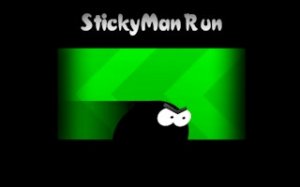
One-Button Jumping and Platform Survival
In Runner Stickman: Reflex Sprint, the stick figure moves forward on its own. Your only action is a tap to jump. The goal is to land on platforms and avoid gaps. Because the character never stops, every jump is a commitment. Missing a platform immediately ends the run, so the game rewards careful timing over frantic tapping. The control scheme is deliberately narrow: one input, one consequence.Procedural Layouts and Rising Speed
Each attempt uses procedural generation to build a new sequence of platforms and gaps. No two runs are identical, so memorizing a fixed layout is not possible. Instead, you read the upcoming pattern and react. Speed increases gradually as the run continues, which shortens the window for each decision. That combination of fresh layouts and accelerating pace creates a natural difficulty curve. The challenge comes from adapting your rhythm rather than learning a script.Minimalist Presentation and Focus
The visual design stays intentionally simple: clean lines, a neutral background, and a stick figure. This removes distractions and keeps attention on the path ahead. Smooth animation and responsive controls make the character's movement predictable, so mistakes feel like timing errors rather than input problems. The lack of visual clutter also helps you spot gaps earlier, which matters more as speed rises.Scoring, Replay Value, and Skill Growth
Distance traveled is the score. There are no levels, unlocks, or external rewards. Motivation comes from beating your personal best. The increasing speed punishes hesitation and rewards a steady tapping rhythm. Over time, regular practice builds muscle memory for when to jump. Some versions of this game type include a mid-air action for a slight boost, but the core strategy remains precise timing. Players who enjoy quick retries and measurable self-improvement will find the loop satisfying.Compatibility
✅ This game supports:
- Desktop browsers (Chrome, Edge, Safari)
- Mobile browsers (Chrome on Android, Safari on iOS)
❌ Does NOT support: - Internet Explorer - Very old browser versions
👉 Try refreshing or updating your browser








Editorial Notes