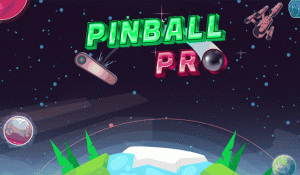
Core Pinball Loop
One ball launches onto a playfield lined with bumpers, ramps, and targets. Your only tools are two flippers, one on each side, and your job is to stop the ball from draining away. Each contact adds to your score, and a ball that stays alive longer creates more scoring opportunities. The loop is easy to start but hard to master.
Reading the Playfield
The table uses bright bumpers and glowing ramps, with dynamic lighting that marks key scoring zones. The layout rewards observation: if you know where the ball will travel after a bumper hit, you can set your flippers for the next shot instead of reacting late. A clean, bright visual style keeps the ball and targets readable during fast sequences.
Scoring, Multipliers, and Ramps
Points come from every successful hit, but the bigger rewards sit behind multipliers and bonus rounds. Hitting a specific sequence of targets can start a multiplier that doubles or triples your score for a limited time. Ramps lead to high-value targets, though they demand precise timing to navigate. This layered scoring pushes you to plan shots rather than just keep the ball alive.
Flipper Controls and the Nudge
Tap or press to activate each flipper. That simplicity makes the game approachable, but the depth comes from timing: a fraction of a second early or late can end a rally. A gentle nudge mechanic lets you slightly influence the ball's path, but overusing it triggers a tilt warning, so it works best as a rare correction rather than a constant tool.
Progression Through Practice
There is no fixed endpoint. The goal is always to beat your previous high score, so improvement comes from practice and pattern recognition. Each session gives you another chance to learn the table's quirks and refine your approach. No narrative or level structure interrupts the skill-based challenge.









Editorial Notes