What You Actually Do
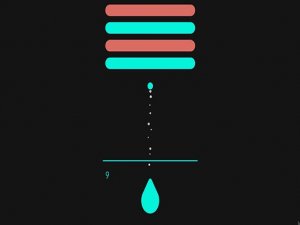
Every round of Block Puzzle Challenge starts with a sparse arrangement of blocks. You tap a block to remove it. That is the entire control scheme. No dragging, no swiping, no combos to memorize. The challenge comes from what happens after those first few taps: more blocks appear, and the speed at which they arrive increases. Your job is to clear them faster than they accumulate. If the screen fills up, the round ends. Each cleared block adds to your score, so the scoring system rewards both speed and the ability to keep the board under control.
Why No Two Rounds Feel the Same
The block patterns are procedurally generated. That means the arrangement you face in one round is not copied from a fixed level design. You cannot memorize a sequence and replay it. Instead, you develop a general feel for how blocks cluster and how quickly gaps close. This design choice keeps the game from becoming a memory test. It also means your first few rounds are genuinely different from your hundredth, even though the core action never changes.
Difficulty That Moves With You
The game does not ask you to select a difficulty setting. It starts easy because only a few blocks are on screen. As you clear them, the game introduces more blocks and raises the speed. That progression is the difficulty curve. Players who react quickly and plan two or three taps ahead will last longer. Players who tap randomly will hit a wall sooner. The game adapts to your pace in the sense that it keeps adding pressure until you cannot keep up, then the round ends.
Look, Feel, and Where to Play
The visual style is minimalist. Blocks are simple shapes, and the background does not compete for attention. That matters because the game is about tracking multiple objects at once. A busy screen would make the core task harder for the wrong reason. Controls are one-touch and work on both desktop computers and mobile devices. There are no tutorials, no complex rules, and no account requirements mentioned. You open the game and start tapping.








Editorial Notes