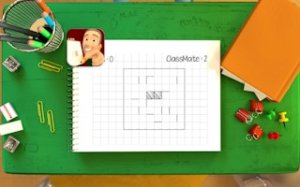
Drawing Lines, Claiming Squares
Grid Strategy Duel is a turn-based puzzle for two players. The board is a grid of dots, and on each turn a player draws one line between two adjacent dots. Completing the fourth side of a 1x1 square claims that square in the player's color, adds a point, and grants another turn. Play continues until no more lines can be placed. The player with the most completed squares wins.
Reading the Board Ahead
The rules take a minute to learn, but the decisions run deeper than they first appear. Because every line you draw becomes a resource for your opponent, you have to weigh each move against the squares it might hand over. Skilled play means thinking several turns ahead and steering the board so that any chain your opponent starts eventually returns the advantage to you. The result is a quiet, tense back-and-forth where a single line can shift the match.
Small Boards, Bigger Boards
Grid size changes the pace of a match. Compact grids produce quick, sharp contests where mistakes are punished almost immediately, while larger grids open up longer sequences and more room for layered planning. The rules stay identical; only the scale of the board shifts the strategic math. That flexibility lets two players pick a length and difficulty that suits the moment, whether that is a short break or a longer session.
Learning Through Repetition
Regular play builds pattern recognition. You start to notice when a small sacrifice now sets up a larger gain later, and you learn to avoid creating chains of squares that your opponent can sweep up. There are no random elements and no complex rules to memorize, so improvement comes from patience and careful thought rather than luck. Over time, players naturally look further ahead and make fewer costly mistakes.










Editorial Notes