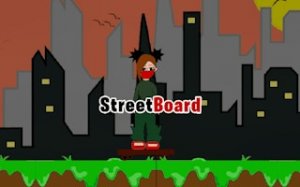
Course Navigation and Obstacle Avoidance
Each run in StreetBoard Arcade Skating Challenge takes place on quiet nighttime streets that have been converted into obstacle courses. The objective is straightforward: reach the finish line without colliding with street lamps, curbs, or other harmless objects placed along the path. These items are not hazards in a punishing sense; they simply require accurate movement and well-timed jumps. The layout of each course varies, with gaps and elevated platforms that demand attention to the upcoming terrain.
Controls Across Devices
On desktop, players use keyboard keys to move left or right and to jump. A double jump expands your options, letting you clear larger gaps or reach higher platforms. On mobile, swiping left or right handles movement, while tapping the screen triggers a jump. Both control schemes are designed to be intuitive, so the basics take little time to learn. The challenge comes from applying those simple inputs with consistent timing as courses grow more demanding.
Timing, Double Jumps, and Pacing
Success depends on reading the course and acting at the right moment. A jump that is too early or too late can end a run, and the double jump is a limited resource that rewards planning rather than reflexive use. Slower runs give you room to learn obstacle placement and practice landings. As you grow comfortable, faster runs test whether your timing holds up. The game does not force a pace; you can stay with slower attempts until the movement feels natural.
Visual Tone and Session Length
The bright, colorful art style keeps the night setting warm and inviting rather than tense. That visual choice supports the game's overall stress-free approach, which avoids violent or adult content. Runs are short enough to fit into a quick break, yet the varied courses offer enough to keep longer sessions interesting. The combination of accessible controls and gradually more demanding layouts makes the game approachable for casual players and skating fans alike.






Editorial Notes