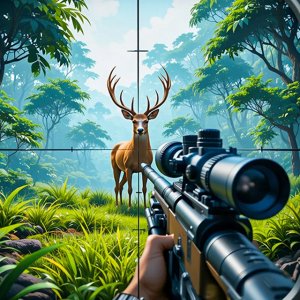
Tracking Mechanics and Observation Tools
In Jungle Wildlife Tracking Adventure, your objective is to locate animals that have a red icon floating above them. These icons mark the current targets for each stage. A telescopic viewing tool lets you zoom in for a closer look without moving too near. Accurate observation is the core skill: you must line up a clear view of each marked animal. Moving carefully matters because sudden movements can disturb nearby wildlife. The game tracks how many animals you have successfully observed and displays the count on screen, so you always know your progress within a stage.
Stage Progression and Equipment Upgrades
Each stage asks you to observe a set number of marked animals. Early stages may require just one observation, while later stages increase the count. After completing a stage, you earn rewards. These rewards can be spent in the in-game shop to buy better equipment for future tracking. Upgrading your gear can make it easier to spot and observe animals in later, more demanding stages. This creates a simple loop: track, observe, earn, upgrade, and repeat.
Controls and Accessibility
You navigate the jungle using standard keyboard controls. The viewing tool activates with a separate input, allowing you to switch between walking and observing. The game runs smoothly on all modern browsers and supports full-screen mode for a more focused experience. It is designed for players aged 12 and older, making it a family-friendly option. The controls are straightforward, so even casual players can pick it up quickly without a lengthy tutorial.
Tips for Effective Tracking
Practice using the viewing tool to line up clear observations before moving. Move slowly through the jungle to avoid alerting animals. Prioritize animals with red icons, as they are your current targets. Save your rewards to purchase better equipment, which can simplify later stages. Learning the movement patterns of different animals helps you predict their paths and improves your success rate. Take your time with each observation to ensure accuracy.








Editorial Notes